
Where Engineering Precision Meets Manufacturing Excellence
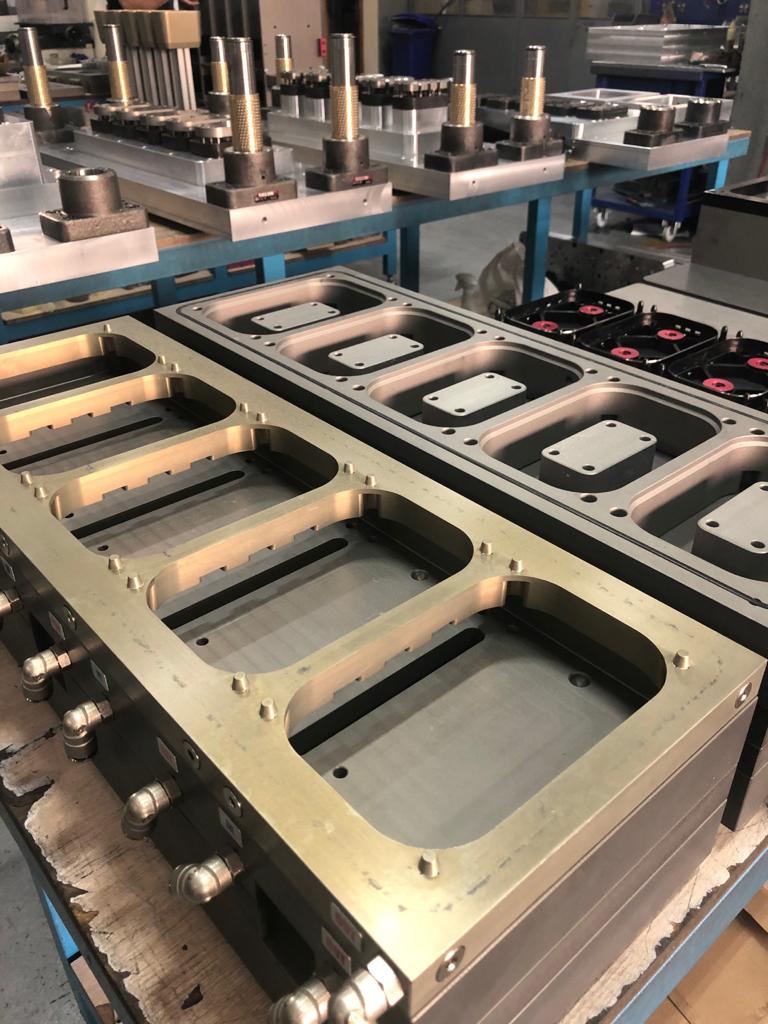
In thermoforming, every successful product begins with one critical component: the mould.
The precision of a thermoforming mould directly influences product quality, production speed, material consumption, cycle time, dimensional accuracy, and ultimately the profitability of the entire manufacturing process.
At Allplastix, we design and manufacture high-performance thermoforming moulds (thermoforming molds) that combine engineering expertise, advanced manufacturing technologies, and decades of practical industry knowledge.
With more than 30 years of engineering experience and customers across 6 continents and over 100 countries, we develop mould solutions that help manufacturers produce better products with greater efficiency, lower operating costs, and exceptional production consistency.
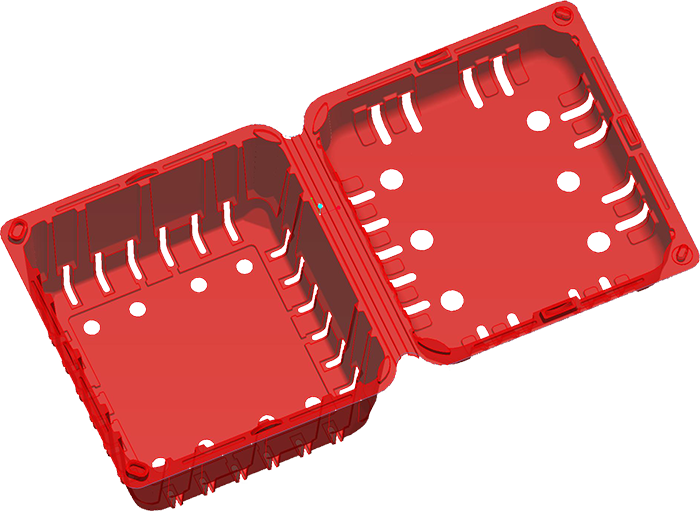
Whether your application involves food packaging, medical products, industrial components, consumer goods, agricultural packaging, or highly customized thermoformed parts, our engineering team develops moulds specifically tailored to your production objectives.
Engineering Begins Long Before Manufacturing
Many suppliers begin by asking what mould should be produced. At Allplastix, we begin by asking a different question: What production result should this mould achieve?
This engineering-first approach allows us to optimize every technical aspect of the project before manufacturing even begins. Rather than focusing only on the geometry of the product, our engineers evaluate the complete production environment, including:
Why Precision Matters
Precision is not simply about dimensional accuracy. A well-engineered thermoforming mould affects nearly every aspect of production. Even minor improvements in mould design can significantly influence:
Over millions of production cycles, these improvements translate into measurable savings, higher product quality, and stronger competitive advantage. For manufacturers operating in high-volume production environments, engineering precision becomes a strategic investment rather than an additional cost.
Our Engineering Philosophy
Every mould we design follows one objective: Deliver maximum production performance throughout its entire operational life. We do not believe that mould design should focus only on manufacturing. Instead, we engineer complete production performance:
By considering the complete lifecycle of the mould, we help customers reduce downtime, simplify maintenance, and maximize production efficiency for years to come.
Product Development Before Tool Manufacturing
Exceptional moulds begin with exceptional engineering. Before any metal is machined, our engineering team performs a comprehensive product development study.
We carefully analyze the shape of the product to identify forming challenges, undercuts, radii, and dimensional tolerances that may affect production performance.
Every thermoplastic material behaves differently during heating, forming, and cooling. Resins: PET, APET, PETG, PP, PS, HIPS, PLA, PVC, ABS, CPET.
Material shrinkage directly affects dimensional accuracy. Our engineering team calculates shrinkage values and incorporates compensation into the design.
Uniform wall thickness is critical for strength and efficiency. We optimize mould geometry to achieve balanced material distribution during forming.
Advanced CAD Engineering
Using professional CAD software, our engineers develop highly accurate three-dimensional mould models that allow every component to be evaluated before manufacturing begins. This eliminates potential production issues and reduces lead times.
CAM Programming
Our machining strategies are developed to maximize surface quality, machining efficiency, tool life, dimensional accuracy, and production consistency. Every machining operation is fully optimized before manufacturing begins.
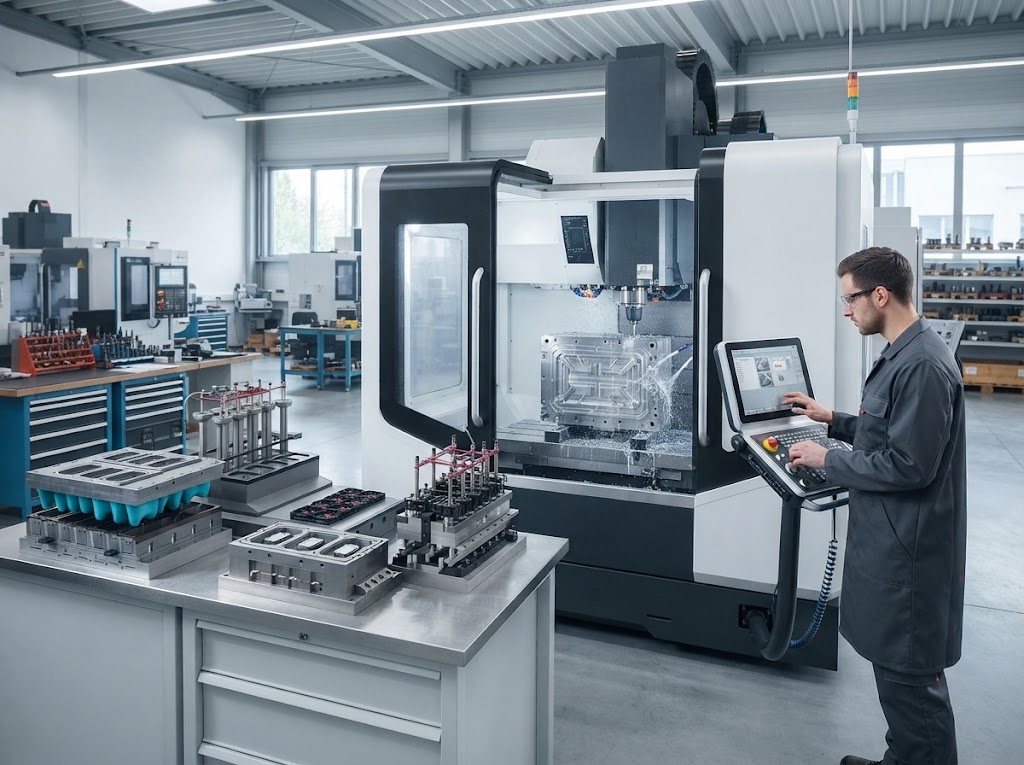
CNC Manufacturing
Our production philosophy is built around precision CNC manufacturing, ensuring that every component meets demanding engineering tolerances. This contributes to better product quality, longer mould life, and reliable assembly.
Selecting the Right Material for the Right Application
The quality of a thermoforming mould begins with selecting the appropriate material. Rather than applying a single material to every project, we evaluate each application individually. Selection criteria include:
Mould Types We Engineer
Food packaging moulds, dairy packaging moulds, fresh produce packaging moulds, medical packaging moulds, pharmaceutical packaging moulds, blister packaging moulds, industrial packaging moulds, electronics packaging moulds, and custom thermoforming moulds.
Advanced Engineering Technologies Behind Every Thermoforming Mould
A high-performance thermoforming mould is the result of thousands of engineering decisions—not a single machining operation. Product quality, production speed, and reliability all depend on how efficiently these decisions are integrated.
Vacuum System Engineering
Vacuum is one of the most critical factors in thermoforming. An improperly designed system can lead to incomplete forming, poor detail, or trapped air. We evaluate air evacuation paths, vacuum hole positioning, response time, and machine capacity to design a distribution network that lets air leave rapidly and uniformly.
Cooling System Optimization
Cooling efficiency directly determines production speed. Poor cooling causes cycle extensions and deformations. Our cooling strategy focuses on achieving uniform temperature distribution while minimizing variations. We optimize channel layout, flow velocity, and water thermal balance to shorten cycles.
Plug Assist Engineering
Many deep-draw packaging types require plug assists to control material stretching. We develop plug assist geometries according to product shape, stretch ratios, and wall thickness targets. This prevents weak corners, reduces material waste, and improves thickness consistency.
Airflow & Surface Engineering
Balanced airflow manages compressed air and vacuum for rapid evacuation and release. Simultaneously, surface quality affects release, aesthetics, and transparency. Mould surfaces are treated (high polish, matte, or micro-textured) to support long-term durability and easy product release.
Structural Rigidity & Aluminium Selection
Moulds must withstand continuous mechanical and thermal loads. We analyze structural integrity to prevent deformation, particularly in multi-cavity or thin-wall systems. We select specific high-grade aluminium alloys based on thermal conductivity and mechanical strength to ensure reliability.
Multi-Cavity & Cycle Time Optimization
Increasing cavity count increases project complexity. Every cavity must form parts identically. We optimize vacuum, temperature balance, and mechanical movement to shave off seconds, helping customers achieve significant cumulative output gains.
Resin & Material Compatibility
Different thermoplastic materials respond differently during stretching and cooling. Our moulds are engineered to support a wide range of production resins:
Market Industries We Serve
Allplastix moulds are active across demanding sectors worldwide:
- Food Packaging: Lids, cups, clamshells, meat/fruit packaging.
- Medical & Pharma: Sterile trays, laboratory products, blister packaging.
- Consumer & Electronics: Blisters, ESD-safe carriers, protective cases.
- Industrial & Agriculture: Horticultural seedling trays, transport packaging.
Engineering That Supports Sustainable Manufacturing
Sustainability is no longer optional. Efficient mould engineering directly lowers material waste, reduces energy consumption, shortens forming cycle duration, and minimizes scrap rates. Our engineering philosophy supports environmentally responsible manufacturing while improving overall production economics.
From Engineering to Production Excellence
A precision thermoforming mould is only as good as the manufacturing process behind it. We manage validation, assembly, quality control and technical support systematically.
Precision CNC Machining
Every mould begins as a digital model. Our CNC manufacturing strategy focuses on high dimensional precision, excellent surface quality, cavity repeatability, and stable component alignment.
Assembly & Quality Control
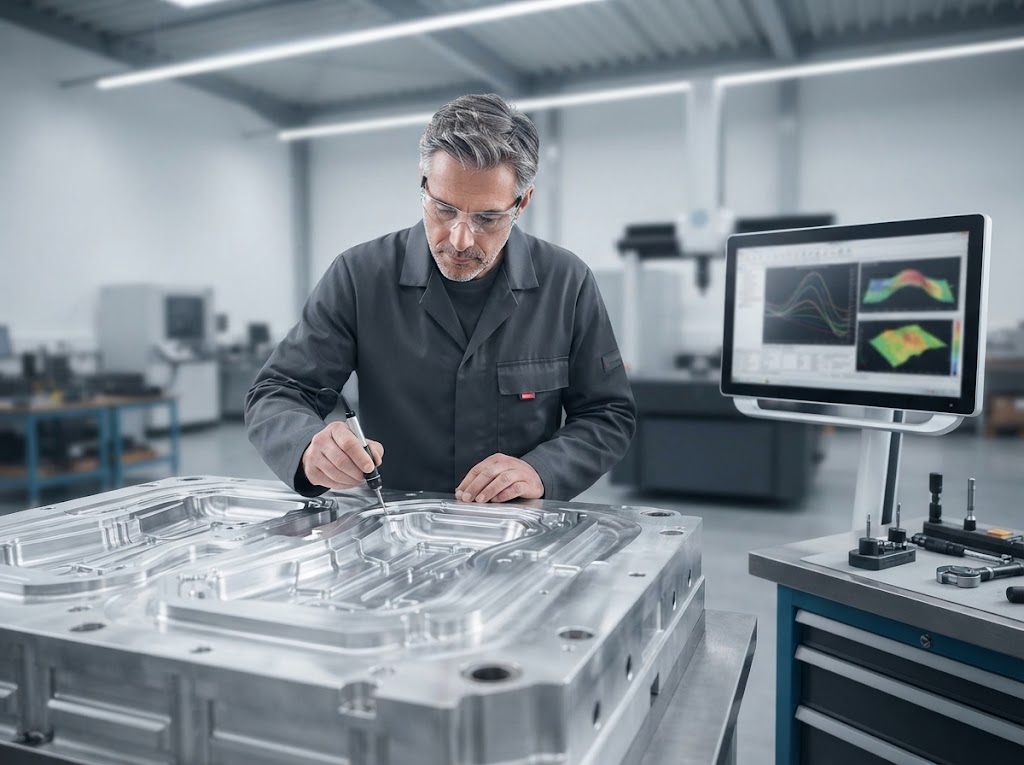
Fitment is treated as an engineering task. Verification includes dimensional tolerances, component fit, cooling/vacuum integrity, and mechanical functionality checking.
Performance Validation
Before delivery, every mould undergoes validation to verify that mechanical assembly, vacuum functionality, and cooling performance function according to original design intent.
Built for Long-Term Reliability
Industrial moulds represent long-term assets. By focusing on durability rather than short-term results, we support continuous production and stable dimensional accuracy over millions of forming cycles.
Mould Refurbishment & Restoration
Refurbishment significantly extends operational life while restoring production efficiency. Services include surface restoration, precision re-machining, component replacement, and cooling system servicing.
Spare Parts & Maintenance Guidance
We supply replacement inserts, vacuum components, seals, and mechanical wear parts to prevent unscheduled downtime. Regular preventative maintenance protects both production efficiency and long-term investment value.
Global Experience, Technical Support
Having supplied customers across 6 continents and more than 100 countries, Allplastix has gained valuable experience working with a wide variety of production requirements, materials, machine configurations, and market expectations. Our commitment does not end at delivery. We support customers with engineering consultations, troubleshooting, and parameter optimization.
We do not measure success by the number of moulds we manufacture, but by the performance those moulds deliver throughout their operational life.
Why Leading Manufacturers Choose Allplastix
Frequently Asked Questions
Technical answers regarding thermoforming tooling configurations, materials and engineering specifications.
What is the standard lead time for a thermoforming mold?
Do you design Plug Assists and trim tools?
Are your molds compatible with third-party machines?
Request a Quote for Thermoforming Molds
Submit your tooling specifications and our design engineers will contact you within 2 business hours.
* Fields marked with an asterisk (*) are required.